
Please wait
Loading
Preparing the page for you.
Please wait
Loading
Preparing the page for you.
A practical guide to moving business applications to the cloud while managing architecture, security, data, cost and operational risk.

Cloud migration has become an important consideration for organizations that want more flexible infrastructure, easier access to modern services and a stronger foundation for evolving business applications. Moving an application to the cloud, however, is not simply a matter of transferring servers from one environment to another.
Business applications often contain critical data, integrations, business rules and operational dependencies. A migration that focuses only on infrastructure can preserve existing limitations or introduce new operational problems.
A successful cloud migration starts with understanding the current application, defining the desired future state and choosing a migration strategy that balances technical improvement with business continuity.
Cloud migration is the process of moving applications, data, infrastructure and related workloads from existing environments into cloud-based infrastructure or services.
The scope can vary significantly. A business may move an existing application with minimal changes, modernize parts of the application during migration or redesign the architecture around managed cloud services.
The right approach depends on the application's technical condition, business importance, compliance requirements, integration landscape and long-term objectives.
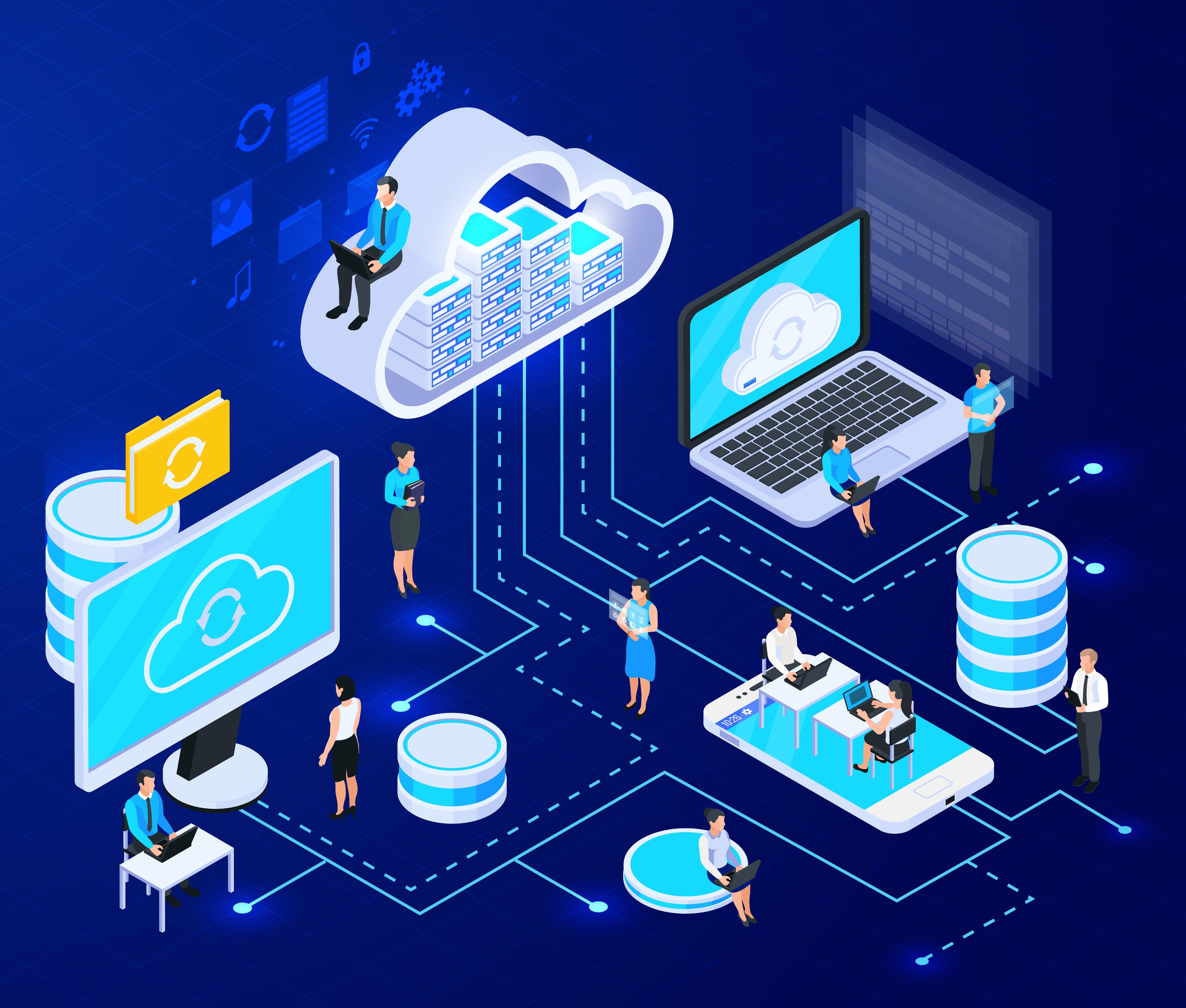
Cloud migration can provide a more flexible operating model, but its value should be considered in the context of specific business requirements rather than treated as an objective by itself.
The business case should identify which of these benefits matter most to the organization and how they will be measured after migration.
The first stage of migration is an assessment of the current application and its environment. This establishes what is being moved, what depends on it and what risks could affect the migration.
The assessment should cover application architecture, databases, integrations, infrastructure, authentication, file storage, scheduled processes and operational procedures.
Dependency mapping is particularly important because applications frequently rely on supporting systems that may not be obvious from the main application architecture.
A migration should have a clear target architecture before implementation begins. The target environment should describe how the application, data, networking, security and operational tooling will work together.
The architecture should also distinguish between components that should remain largely unchanged and components that should be modernized as part of the migration.
This prevents the migration from becoming an infrastructure move without a clear understanding of how the application will operate afterward.

There is no single cloud migration strategy that works for every business application. The appropriate strategy depends on the application's condition and the organization's objectives.
Different applications within the same organization can use different strategies. Migration planning should therefore be workload-specific rather than based on a single company-wide assumption.
Applications often benefit from preparation before they are moved. This can include removing unused dependencies, updating unsupported components, improving configuration management and documenting deployment procedures.
The goal is not necessarily to modernize the entire application before migration. Instead, the team should eliminate avoidable sources of migration risk and make the application easier to operate in its new environment.
Configuration should also be separated from application code where appropriate so that environments can be managed consistently.
Data migration is one of the most important parts of a business application migration. Databases may contain critical operational records, historical information and relationships that applications rely on.
The migration plan should establish what data needs to move, where it will reside, how it will be transferred and how its integrity will be validated.
The team should also determine whether migration can happen during a maintenance window or whether a staged approach is required to minimize downtime.

Moving an application to the cloud does not automatically make it secure. Security architecture should be designed as part of the migration rather than added after deployment.
Identity and access management, network controls, encryption, secrets management, logging and monitoring should all be considered during architecture planning.
Access should follow the principle of least privilege, with permissions granted according to actual application and operational responsibilities.
Cloud migration can change how an application communicates with databases, external services and internal systems. Existing network assumptions may therefore need to be reconsidered.
Applications should have clearly defined communication paths and appropriate controls between public-facing components, application services, databases and external integrations.
API-based integrations can also make the migrated environment easier to manage by creating explicit boundaries between systems.
A cloud migration should include a clear recovery strategy. Backups are useful only when they can be restored successfully and when the organization understands how recovery will work during an incident.
Recovery planning should cover application data, configuration, infrastructure dependencies and the procedures required to bring critical services back online.
Recovery objectives should reflect business requirements. A system that supports an important operational process may require a different recovery design from a non-critical internal application.
After migration, the team needs visibility into how the application is behaving. Monitoring should cover availability, application errors, infrastructure health, resource utilization and important business operations.
Centralized logs and meaningful alerts can help teams identify problems before they become major operational incidents.
Observability should be designed before production migration so that the team is not effectively operating a new environment without adequate visibility into it.

A cloud migration should be validated in an environment that closely represents production. Testing should verify not only whether the application starts, but whether critical business workflows continue to operate correctly.
Integration testing is particularly important because dependencies such as email services, payment systems, APIs, identity providers and scheduled processes can behave differently after migration.
User acceptance testing should also involve the people who depend on the application for day-to-day business operations.
Not every business application needs to move to the cloud in a single cutover. A phased migration can reduce operational risk by moving components, environments or user groups in controlled stages.
For complex applications, the organization may first migrate a non-production environment, validate the architecture and then progressively move production workloads.
A phased approach also provides opportunities to identify issues early and improve the migration process before the most critical workloads are moved.
Production cutover should be treated as a controlled operational event. The migration team should know when the transition will occur, who owns each activity and what conditions would trigger a rollback.
Data synchronization, DNS or routing changes, application configuration and integration endpoints should be coordinated so that the production environment becomes usable as a complete system rather than as a collection of independently migrated components.
The organization should also communicate the expected transition to affected users and operational teams.
Migration does not end when the application is running successfully in the cloud. The post-migration phase is an opportunity to evaluate the environment and remove unnecessary complexity.
Teams can review resource usage, operational processes, security configuration, backup procedures and application performance after real workloads have been observed.
Where appropriate, the organization can then move from basic migration toward deeper modernization, automation and better use of managed cloud capabilities.
Cloud migration projects become unnecessarily difficult when planning focuses on moving infrastructure rather than understanding the complete application ecosystem.
A disciplined migration treats architecture, data, security, operations and business continuity as connected parts of the same transformation.
A practical roadmap should divide migration into manageable stages and establish clear outcomes for each stage.
This roadmap allows the organization to learn from earlier migrations and apply those lessons to subsequent workloads.
Cloud migration can be more than an infrastructure transition. When planned carefully, it can create a foundation for improving application architecture, deployment practices, security and operational processes.
Once workloads are operating in a modern environment, organizations can progressively introduce APIs, managed services, automated deployment, improved observability and other architectural improvements where they provide genuine value.
The objective should be a sustainable technology environment that supports the business rather than simply replacing one hosting location with another.
Cloud migration for business applications is most effective when it is approached as a structured transformation rather than a simple infrastructure move. A clear assessment, appropriate migration strategy, secure target architecture and carefully planned data transition can significantly reduce risk. Testing, observability, recovery planning and controlled cutovers then help protect business continuity during the transition. Once the application is operating reliably in the cloud, the organization can continue improving its architecture and operations over time. The result is not simply an application hosted in the cloud, but a more flexible and maintainable foundation for future business growth.
Discover practical approaches to modernizing legacy business systems while reducing operational disruption and preserving business continuity.
Understand the core layers, components and technical decisions that shape a modern business application.
Explore the product, architecture and technology decisions that help digital products evolve as users, features and business requirements grow.